Norse vs Greek: the real feud behind War of Gods
Two pantheons, two world-views, one mortal caught in between. A look at the mythology that fuels the saga.
Put Asgard and Olympus in the same sky and something has to give. The Greek gods are gods of appetite and pride — they love, rage and meddle like an immortal family that never left the dinner table. The Norse gods carry a different weight: they already know the world ends at Ragnarök, and they fight anyway. One mythology is ruled by ego; the other by fate.
War of Gods lives in the collision between those two temperaments. When Zeus’ thunder answers the ravens of Odin, it isn’t just a battle of powers — it’s a battle of philosophies. Does the future bend to the will of the strongest, or is it already written, waiting?
That’s why the story needs a mortal at its center. Gods can’t change; that’s the whole point of them. Only someone small, brief and free can tip a war that the immortals themselves believe is fixed. Fregga isn’t powerful. She’s possible — and to beings who deal only in certainties, possibility is the most dangerous thing in the nine realms.
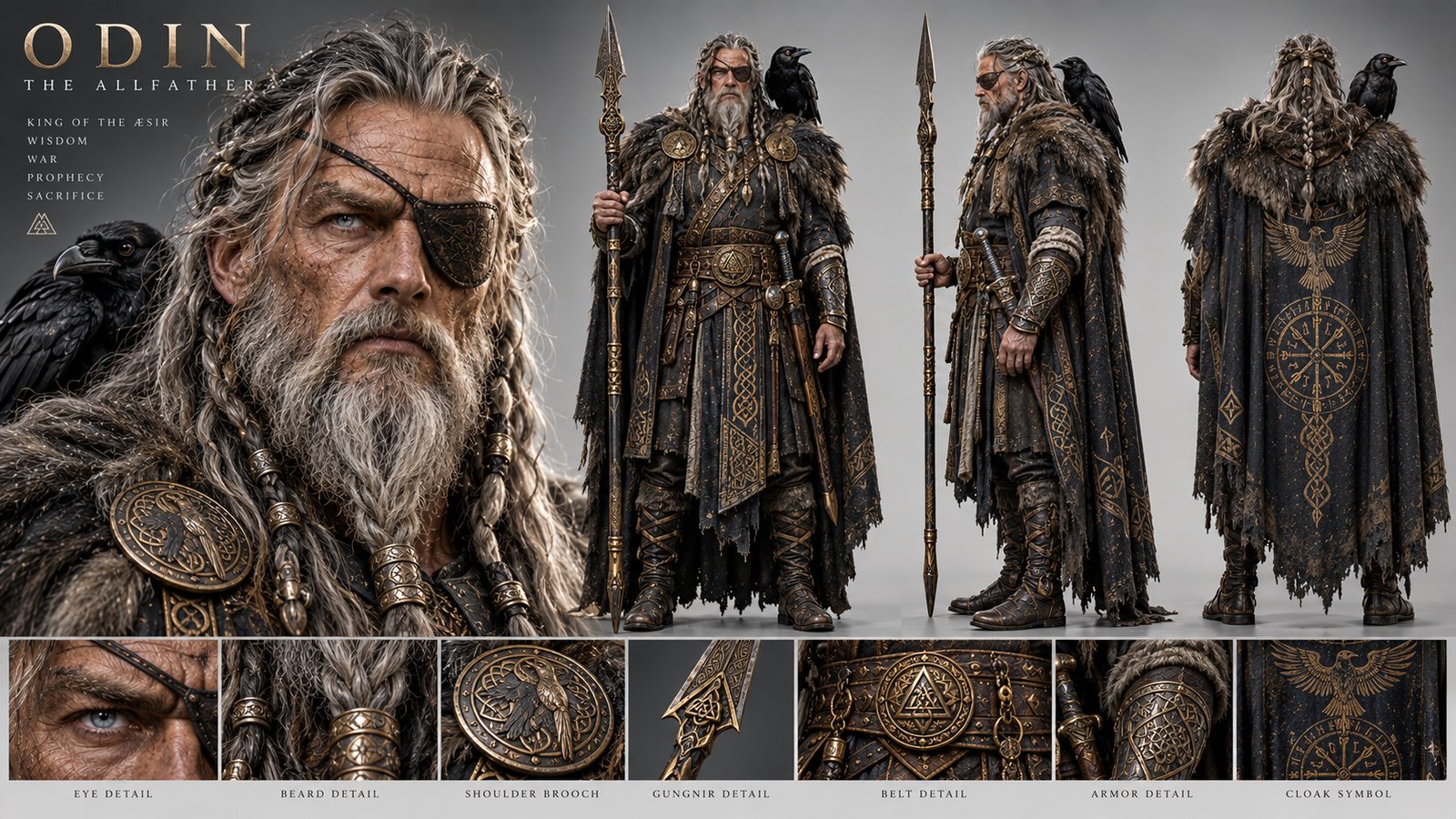
Visually, the two worlds are built to feel different on sight: Asgard in frost, iron and worn gold; Olympus in marble, laurel and storm-light. The saga leans into those contrasts so you always know, in a single frame, whose sky you’re standing under.
It’s old mythology told with new tools — but the questions underneath are the ones these stories have always asked. What do we owe fate? And what happens when one ordinary life decides not to pay?